Movement, timing and trust
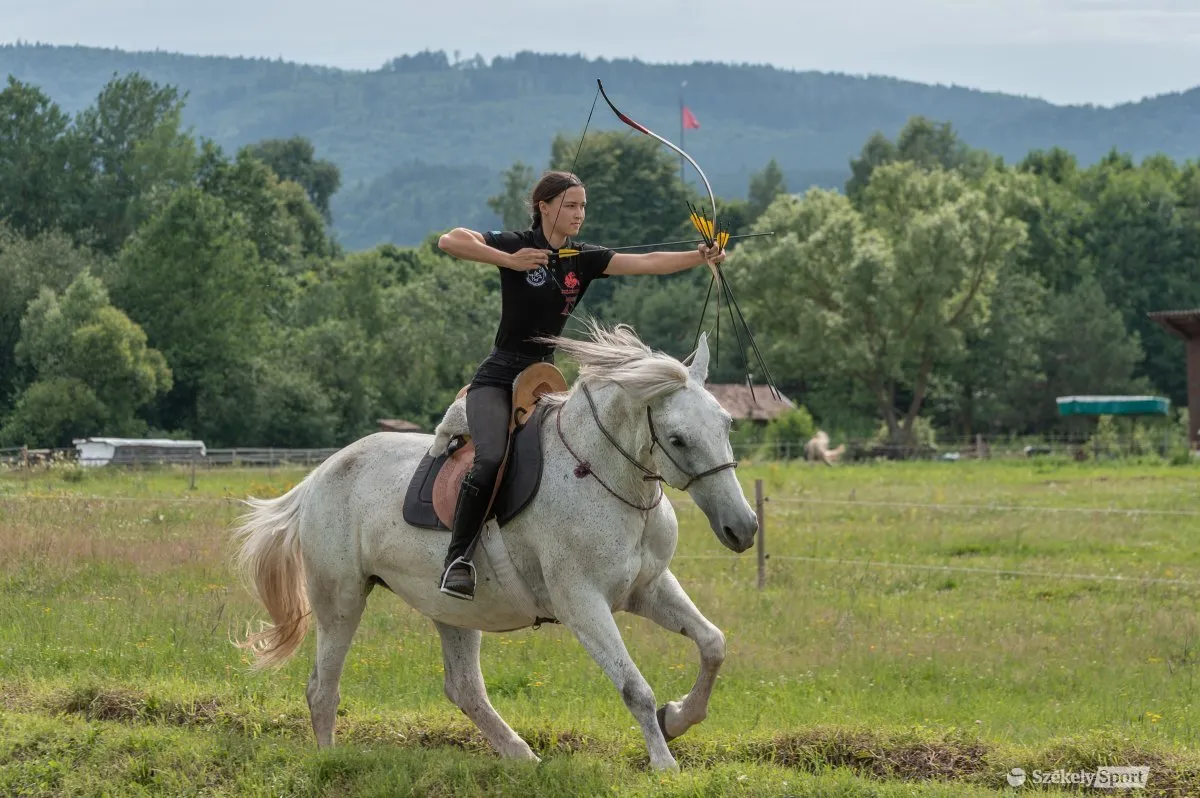
The modern competition system sets a clearly measurable task. Every run demands secure riding, controlled bow technique and continuous attention.
Ninety-nine metres within twenty seconds
The track is straight, ninety-nine metres long and ninety centimetres wide. Two low earth mounds guide the horse. The centre of the target stands two metres high and nine metres from the track centre line.
The target face turns to follow the rider, remaining perpendicular to the direction of each shot. The archer can shoot forward, sideways and backwards.
A competition consists of nine runs. Warm-up includes one run at a walk, one at a trot and one at a canter. Each valid competition run is completed at a canter within twenty seconds.
Kassai Lajos
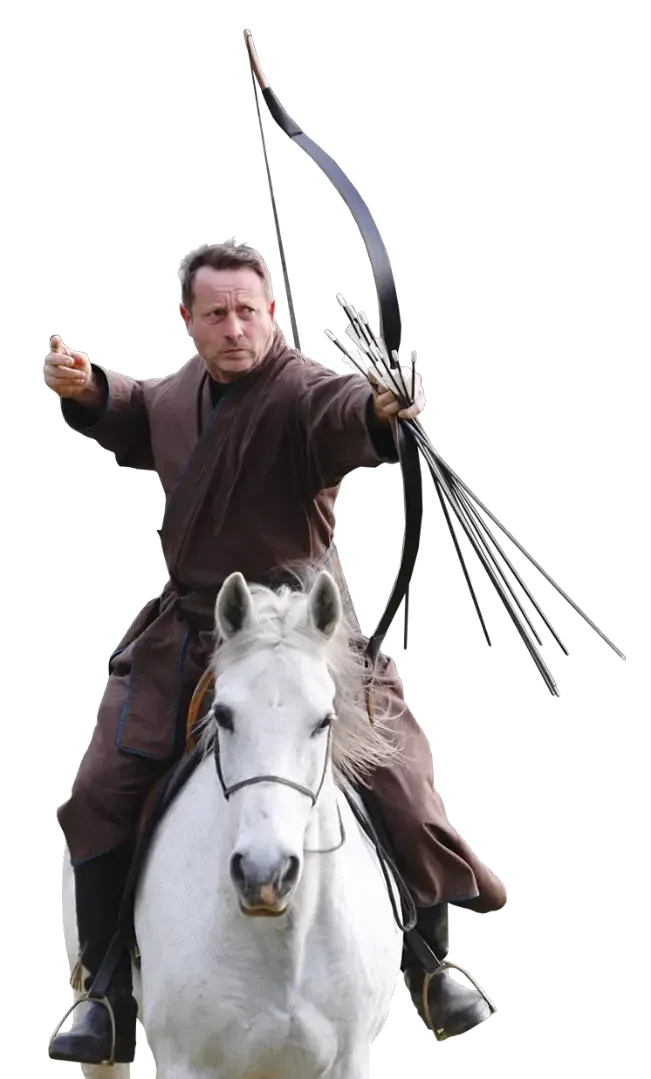
The founder of modern equestrian archery.
He made bows as a child, and in the mid-1980s he opened a workshop in Hungary for the ones he designed himself. He first got on a horse holding one of them without knowing how to ride, and loosed an arrow. He then did it every day for thirty years.
The first competition under the Original Kassai System was held in 1994. In 2011 the system became an accredited university course, in 2012 part of Hungarian cultural heritage, and in 2013 a hungarikum. In 2020, together with the international judges, he founded the World Federation of Equestrian Archery, based in Lausanne, of which he is founding president.
The Csiba track is ninety-nine metres because he set the distance. Lőrincz Rómeó entered the Kassai School in 2018, and the Vasfúvó hill is one of the places his work reached.
- 99m
- 9
- 20
The drawing shows the principal dimensions in the current WFEA rules. The target stands halfway along the track and turns to follow the rider.
Four, three, two
The inner ring of the ninety-centimetre target is worth four points, the middle ring three and the outer ring two. On a valid run, the time remaining from twenty seconds is added to the shot score.
- 4
- 3
- 2
Several techniques on one track
The rules published by WFEA describe four core categories. The system continues to develop, so the current official rules remain the final reference.
Kassai style
A three-finger release with arrows loaded from the bow hand.
Thumb draw
Drawing and release are built around the use of the thumb.
Quiver load
Arrows are drawn from a quiver attached to the archer.
Fast horse
No more than three arrows may be shot during the run.
Bows, quivers, arrows
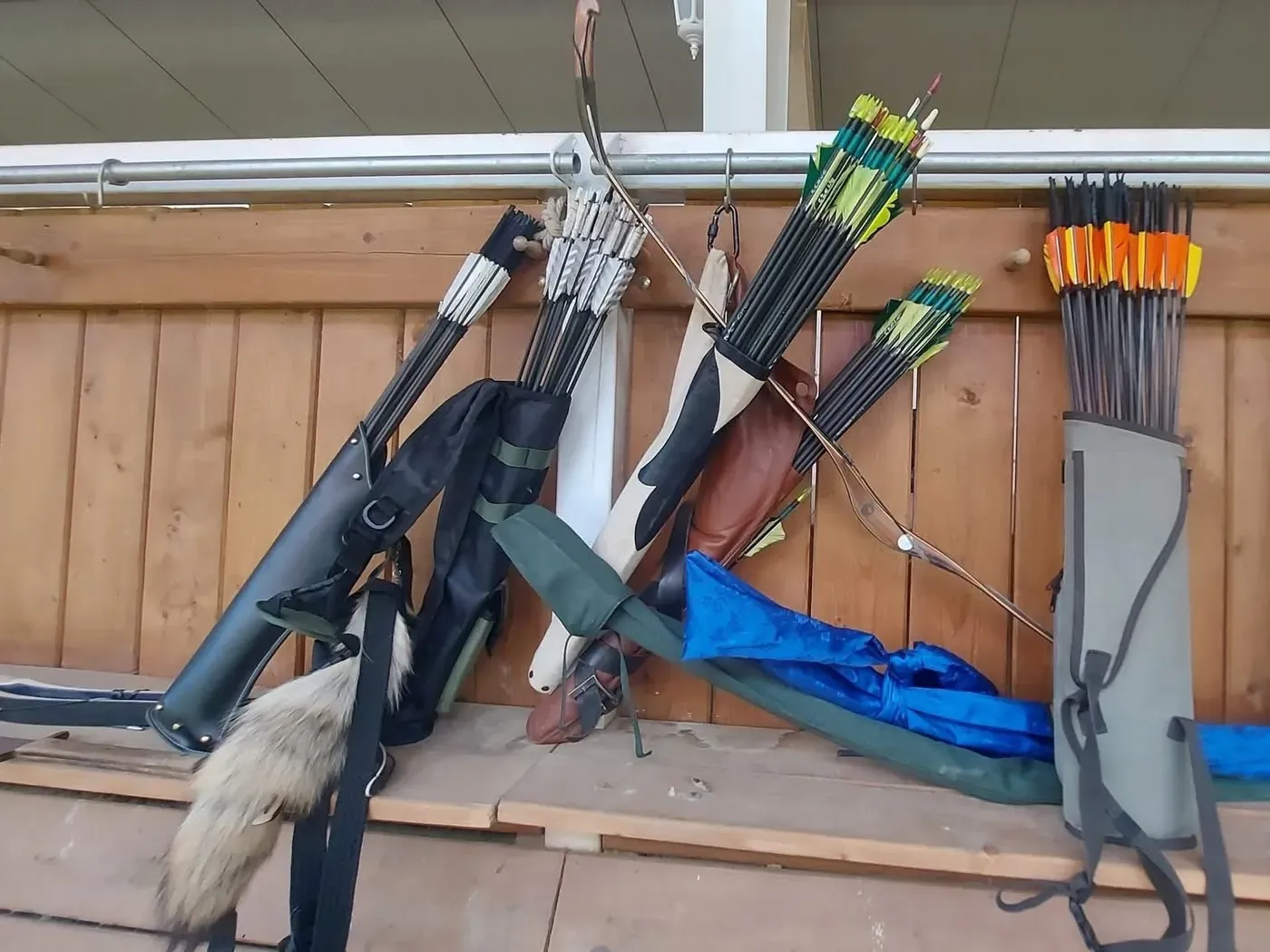
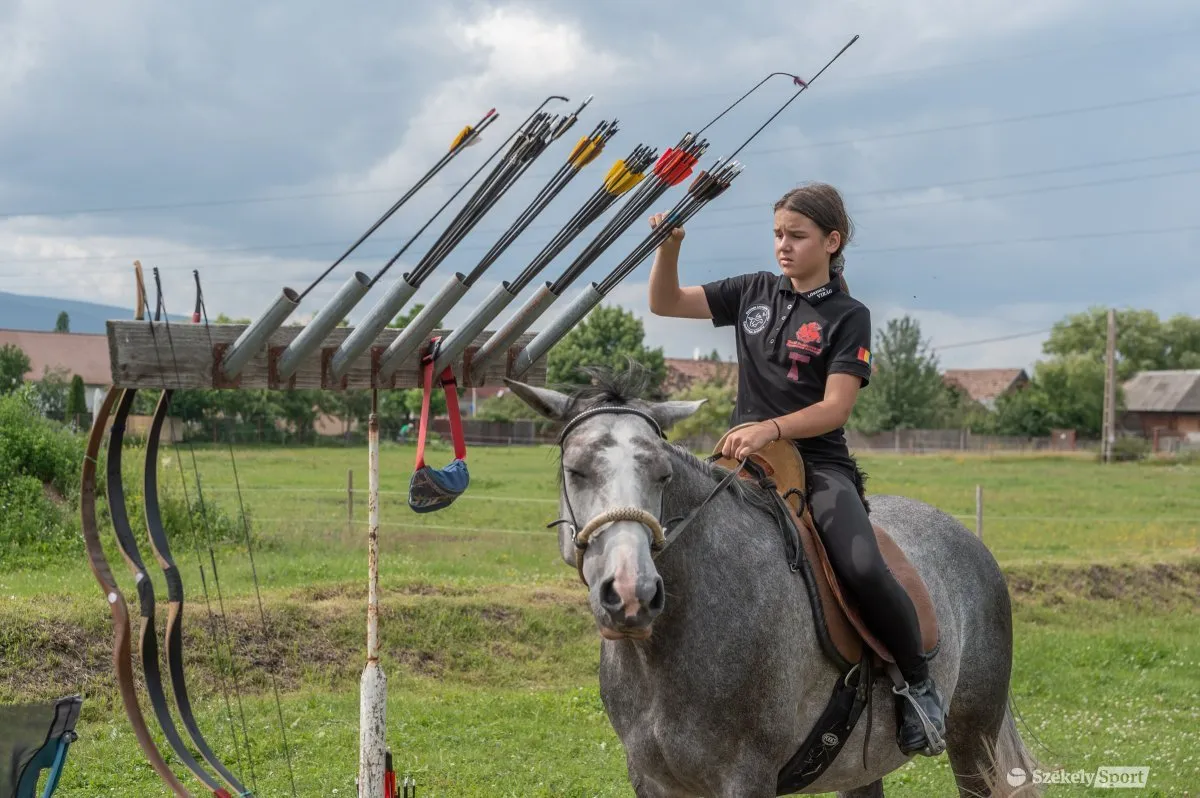
WFEA rules allow several kinds of bow, but exclude sights, stabilisers and other aiming aids. Arrows come either from a quiver attached to the archer or from the hand holding the bow, depending on the competition category. Nobody needs their own equipment for a first session.
A run shaped together
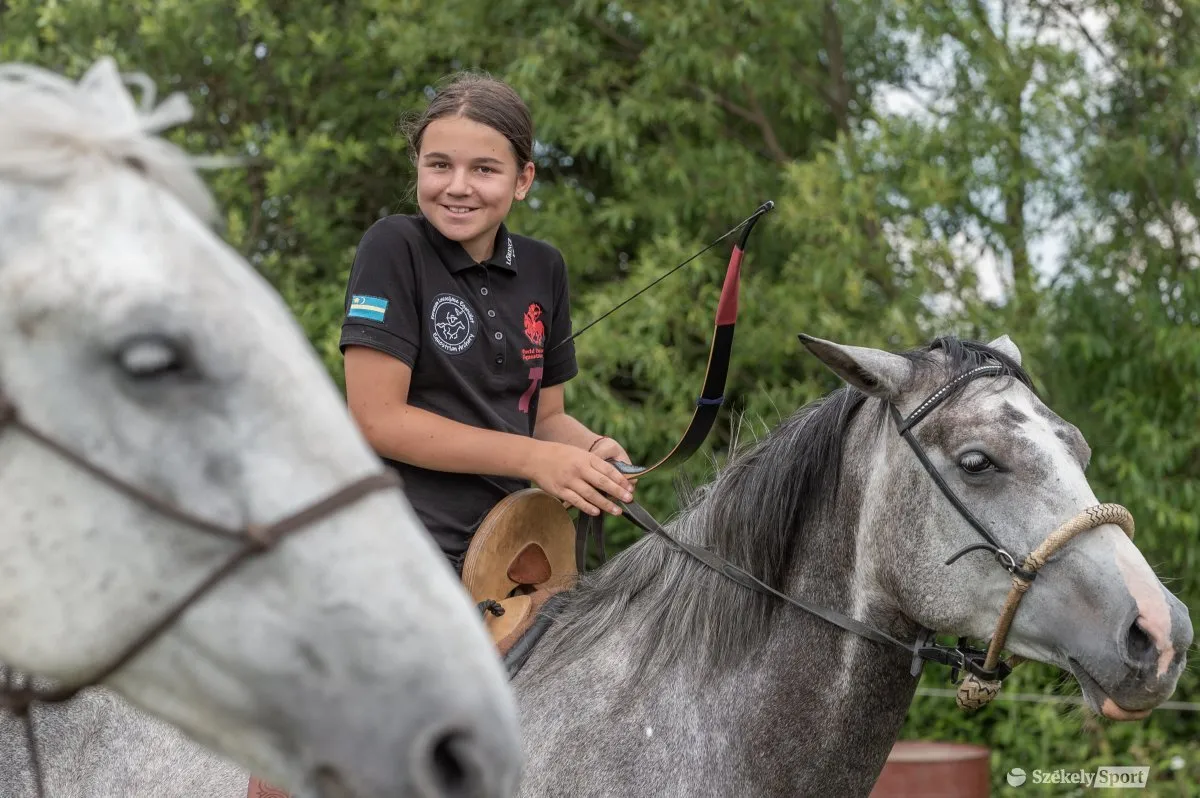
Both of the rider’s hands work with the bow. Weight, balance and movement therefore carry much of the communication with the horse.
Preparation takes time. A safe run begins with the horse’s health, calmness, appropriate training and relationship with the rider.
Readiness matters before every run
WFEA rules exclude an unprepared rider and any horse that is unprepared, injured, lame or in poor condition. The judge’s first duty is the safety of people and horses.
Training and camps